Key takeaways
- There is no box office for visits. The Opéra’s rule is printed on its own site: online booking mandatory, no visit tickets sold on site. Book before you cross the square, not after — what happens if you turn up anyway and check live dates.
- The official ticket is the cheap way in. At the time of writing, operadeparis.fr lists the self-guided visit at €15 for adults from France and the EEA and €25 from outside it, with under-12s free. Those rates are the Opéra’s to change, so treat them as approximate — every rate, set out plainly.
- No ticket guarantees the auditorium. This is a working theatre, and rehearsals close the red-and-gold room frequently and without notice. The staircase and the Grand Foyer are certain; the auditorium is a hope — the closure problem in full and what you will definitely see.
- The dramatized visit is the storytelling pick. Ninety minutes with a costumed guide, entry included, in separate French and English slots, from €40 — and it carries more reviews than the rest of this catalogue put together — reviewed in full and the guided options compared.
- Come by métro, and to the right corner. Opéra station (lines 3, 7, 8) is directly outside and RER A at Auber is the closest regional stop, but the visitor entrance is the Rue Scribe–Rue Auber corner, not the grand steps everyone photographs — getting there without queueing at the wrong door.
What the official ticket covers, and what a guided visit adds
Read these two columns next to each other before you spend anything. The left-hand one is enough for many people, and I would rather say so here than after you have paid a commission through my links.
What the official self-guided ticket gets you
- The visit route at your own pace: the white marble double staircase, the gilded Grand Foyer and the rooms between them — the walking order that works best
- The auditorium, when rehearsals allow it — and frequently they do not, which is the honest print on every ticket — how the closures work
- The Bibliothèque-musée de l’Opéra, the library-museum that sits inside the visit route and that most people hurry past
- Bought at operadeparis.fr only — online booking is mandatory and nothing is sold at the door
- Last admission one hour before closing, and the labels are thin: the rooms are spectacular and largely unexplained
What the dramatized visit adds — and what it does not
- A costumed storyteller for 1.5 hours, entry included — the 1896 accident, the Phantom and the house gossip told properly — my full review
- Separate French and English time slots, not a bilingual mumble — book the language you actually want
- A clear meeting point: the Rue Scribe × Rue Auber corner, under the left column with the eagle, where the guide holds an “UN AMOUR D’OPERA” sign
- Free cancellation to 24 hours before the start
- Not the stage, the underground areas or the workshops — public rooms only — and no tour can promise the auditorium either, because rehearsals outrank everyone — all the guided options, compared
The visit, in order
The walk nearly every visitor makes, in the sequence the building lays it out. Self-guided or with a storyteller, this is the shape of it.
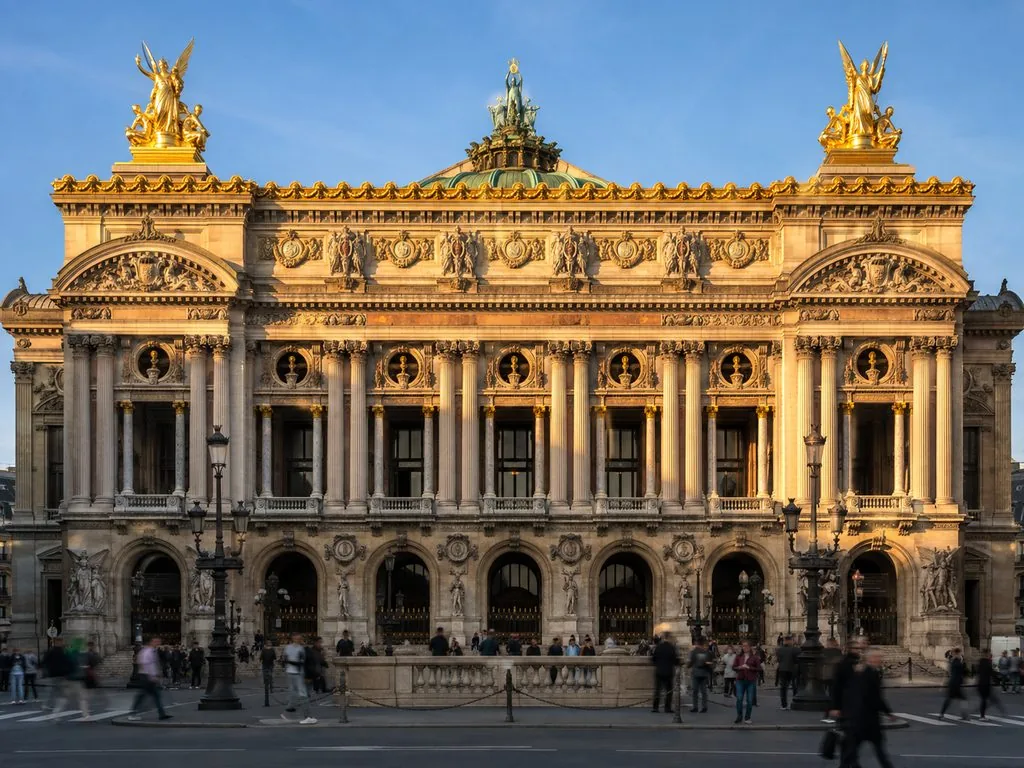
Everything starts at the same corner. Visitors enter on the Rue Scribe side, at the corner with Rue Auber — not up the grand steps facing the Place de l’Opéra — and the route climbs from there into the rooms Garnier built to be seen in.
- The Rue Scribe entrance — The visitor door, at the corner of Rue Scribe and Rue Auber in the 9th. People queue on the wrong side of the building most mornings — how to arrive at the right corner.
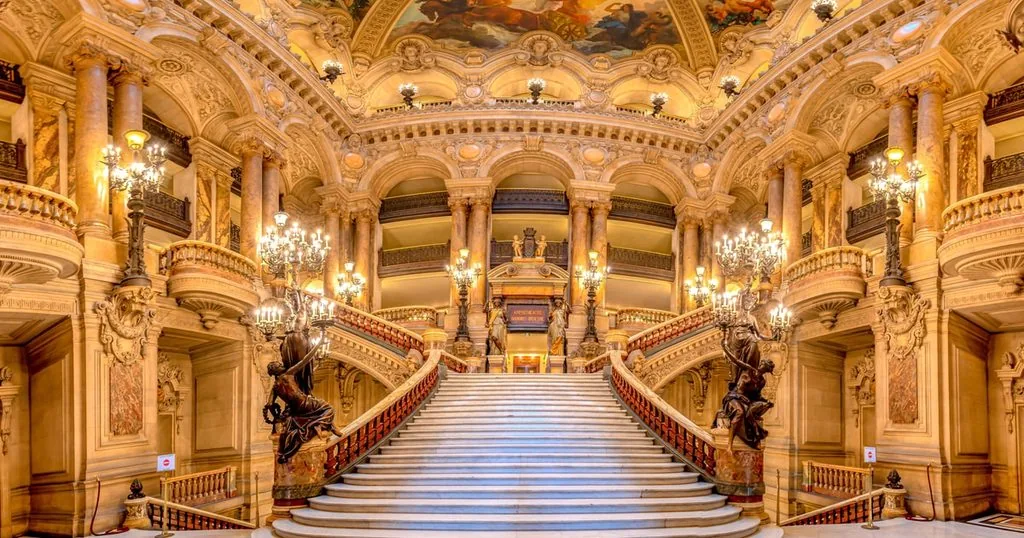
- The Grand Staircase — The white marble double staircase, one of the two rooms everyone remembers afterwards. Garnier designed it as a stage for the audience itself.
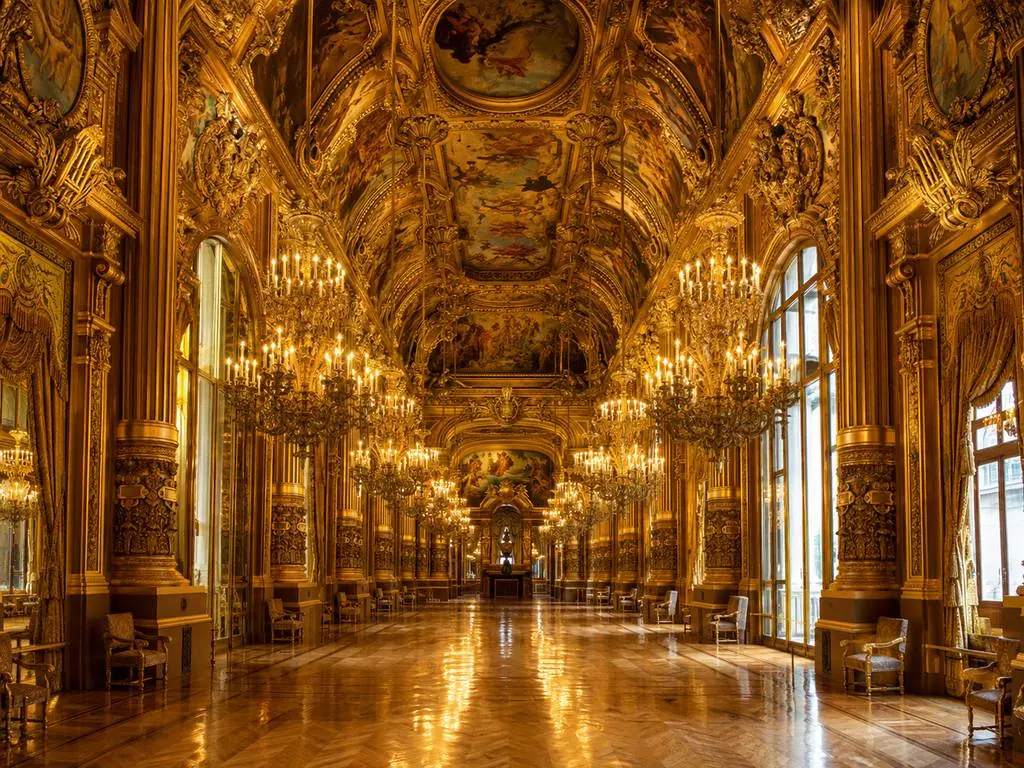
- The Grand Foyer & loggia — The gilded hall built for the interval promenade, with the loggia looking down the Avenue de l’Opéra. The other room everyone remembers.
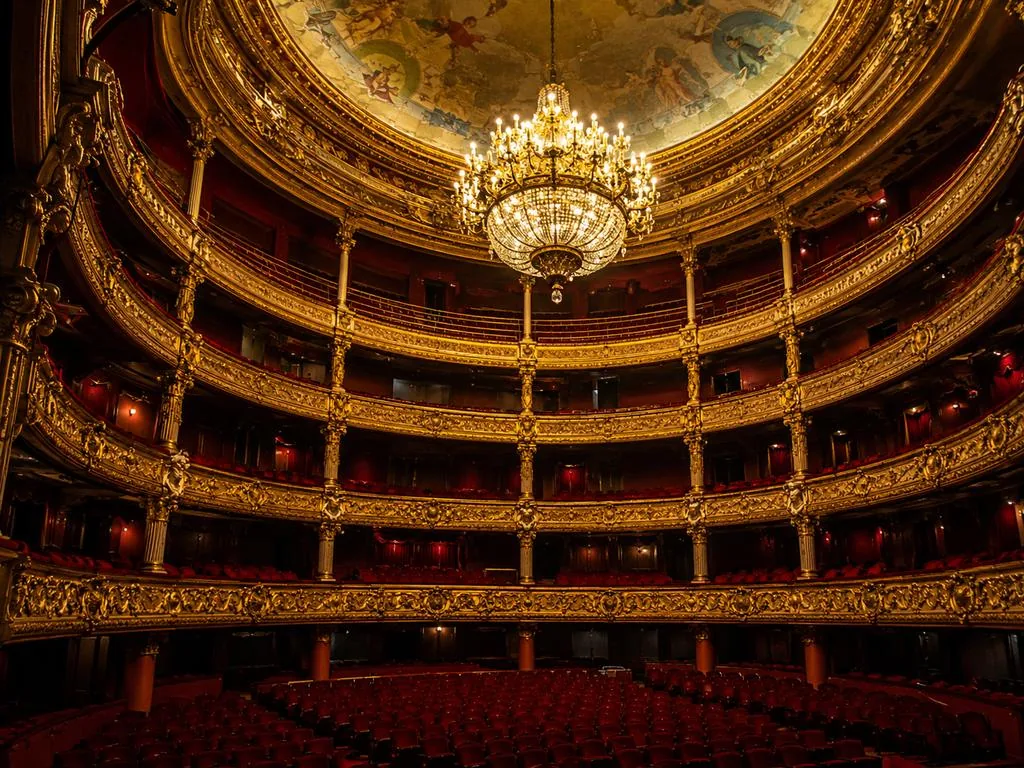
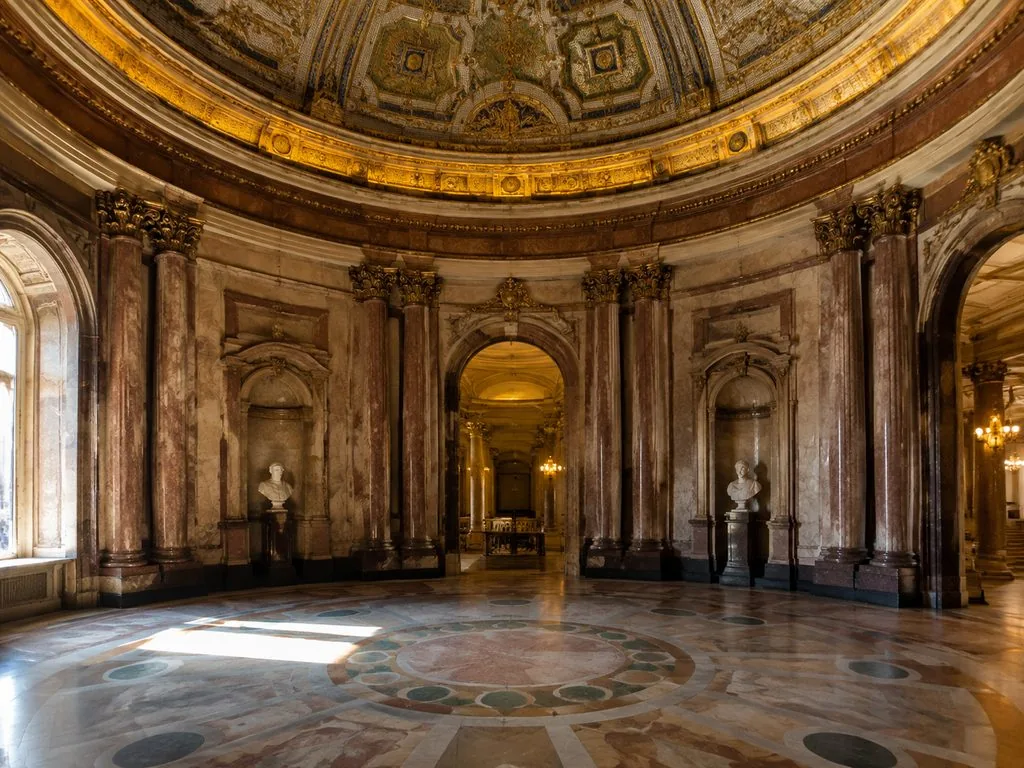
- The auditorium — if rehearsals allow — The 1,979-seat horseshoe in red velvet and gold, the seven-tonne chandelier, and Marc Chagall’s 1964 ceiling installed over Lenepveu’s original. Closed frequently and without notice for rehearsals — why you cannot count on it.
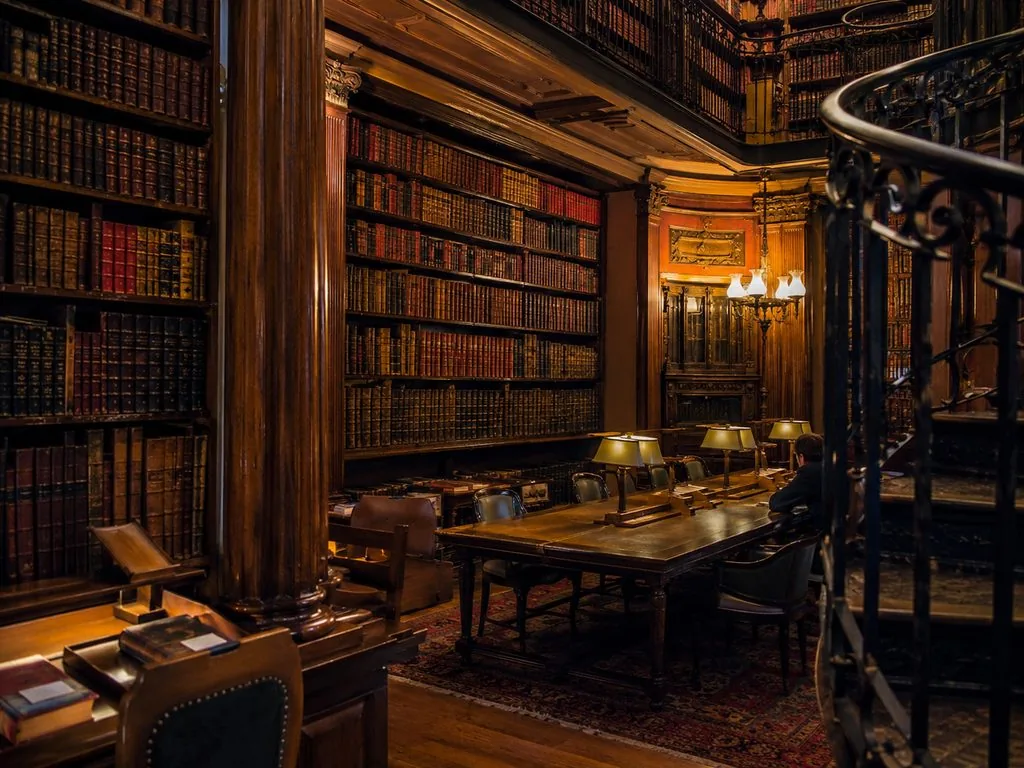
- The library-museum — The Bibliothèque-musée de l’Opéra sits inside the visit route: scores, models and paintings from three centuries of the institution’s life.
- Shop and exit — Out past the boutique and back to the Place de l’Opéra, with the Café de la Paix facing you across the square.
A typical self-guided visit takes 1 to 1.5 hours; guided visits run about 90 minutes — how long to allow and what to look for in each room.
How to choose, in four steps
Accept the two truths
Visit tickets are sold online only, never at the door, and no ticket — official or tour — guarantees the auditorium. Every good decision about this building starts there.
Rooms only? Buy the official ticket
If all you want is the staircase, the foyer and a quiet wander, the self-guided ticket at operadeparis.fr is the cheap way in and I will not pretend otherwise.
Stories? Hire a storyteller
The building does not explain itself. If you want the Phantom, the chandelier and the gossip told properly, that is what the tours on this page sell — compared honestly here.
Book ahead, and trust the widget
Every figure on this page is a from-price that moves with the date. The live availability below is the number you will actually pay, and English slots on the dramatized visit sell ahead.
Check dates for the visit I recommend first
The dramatized guided visit: 1.5 hours with a costumed storyteller, entry included, separate French and English slots, free cancellation to 24 hours. From €40 a person, rated 4.7 from 134 reviews — the only Garnier product with a review base that size, and the reason it is the default recommendation on this site — my full review. If you only want the rooms, read the official rates first.
Storyteller, self-paced combo, or a private guide?
The three listings that settle most decisions here. Prices, ratings and review counts are the live GetYourGuide figures, and every price is a from-price that moves with the date. Read the review row before the price row: two of these three have very thin evidence.
| Palais Garnier Self-Guided Tour & Fragonard Perfume Museum | Start hereOpera Garnier: Dramatized Guided Visit in French or English | Private Tour of the Opéra Garnier Theater | |
|---|---|---|---|
| Price | €79 / person | €40 / person | €167 / person |
| Palais Garnier entry | Included — self-paced, at your own speed | Included, with the whole visit narrated | Included, with a guide to yourselves |
| What you actually get | A self-guided Garnier ticket plus a guided visit of the Fragonard perfume museum nearby. A convenience combo, and I call it that on its review page | 1.5 hours with a costumed storyteller through the public rooms — staircase, foyer, and the auditorium when rehearsals allow. Separate French and English slots | A private guide who pairs the opera house with the Galeries Lafayette dome a few minutes away — reviewers kept naming their guide |
| Review base | 4.0 from just 10 reviews — thin, and one of them says the museum leg felt rushed | 4.7 from 134 reviews — the only listing here with a review pool that means much | 4.9 from 14 reviews — small but unusually strong |
| Who it suits | People who want entry sorted and like perfume more than opera — reviewed in full | Most first-time visitors, most days. The stories are the point of this building — reviewed in full | Couples and small groups who want the questions answered as they occur — reviewed in full |
| View → | Book this → | View → |
Photo Gallery
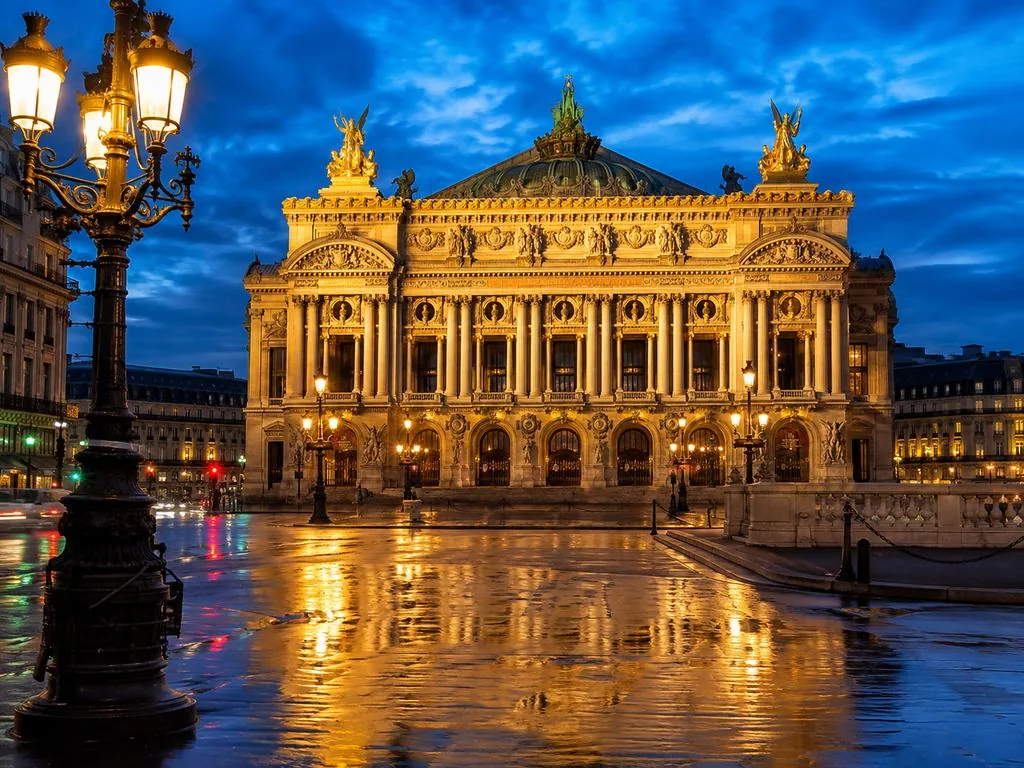
Marble, gold, and a chandelier with a past
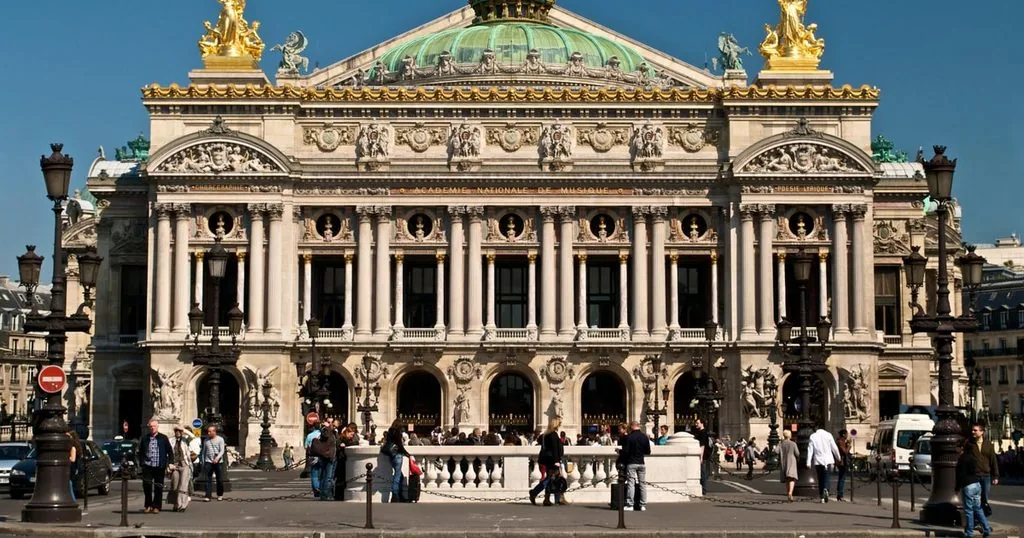
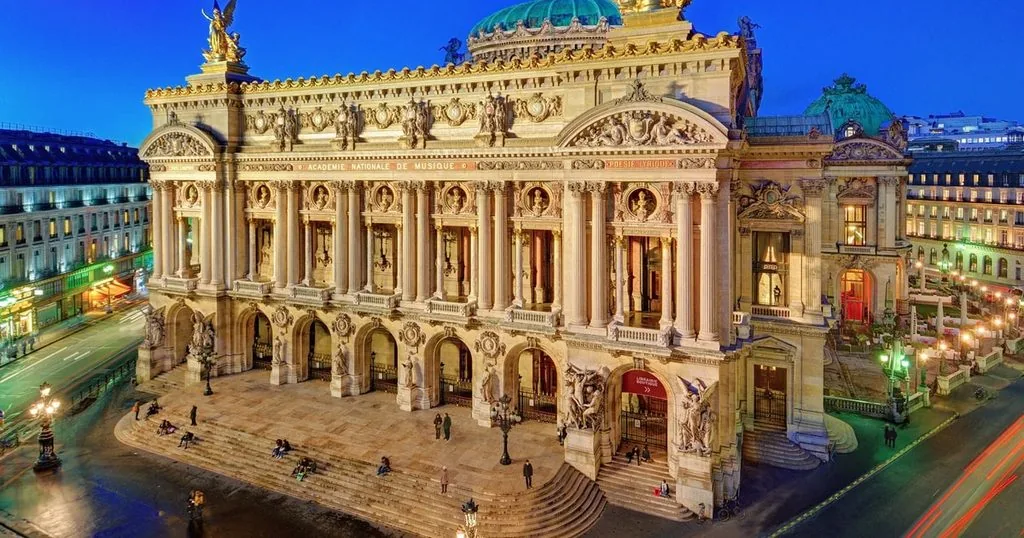
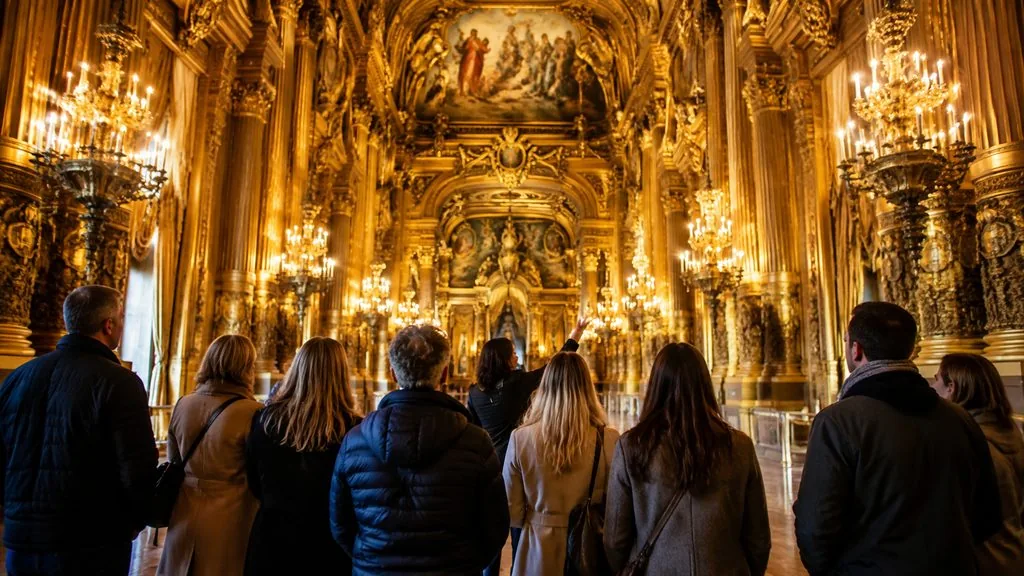
What the visit actually looks like: the façade everyone photographs, the two rooms everyone remembers, and the auditorium you might — or might not — get into.
The six listings worth comparing
One thing to know before the cards: the catalogue for this monument is young. The dramatized visit carries 134 reviews; every other listing has under 15, and I flag that wherever it matters. One of the six — the theatre-district walking tour — never enters the Palais Garnier at all; it is an evening of Phantom and musical-theatre lore around the building. Every card opens live availability, and every product has an honest review on this site — or see all six on one page.
 Entry included
Opera Garnier: Dramatized Guided Visit in French or English
 Phantom stories
Paris Theatre & Musicals Walking Tour: Les Miz, Phantom & More
 Self-paced combo
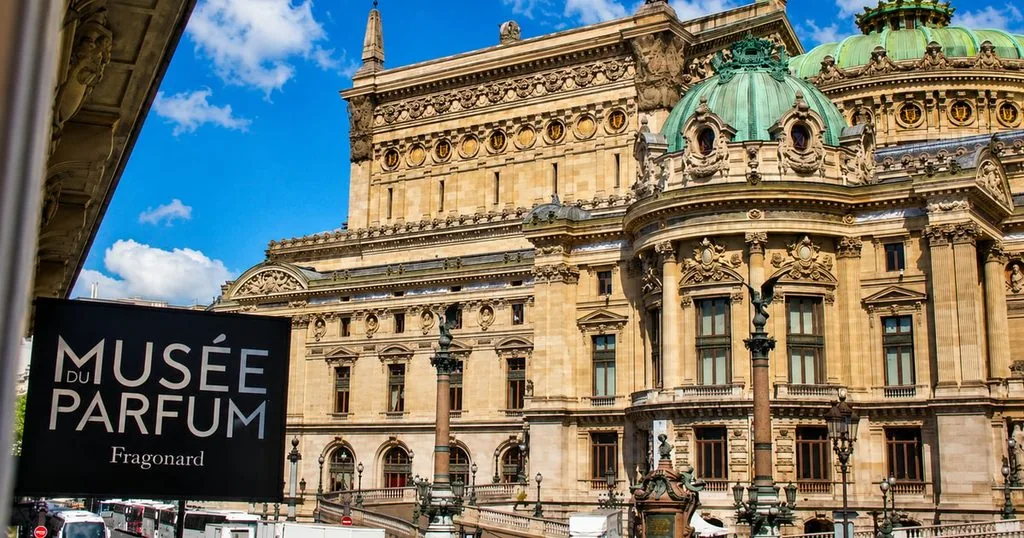
Palais Garnier Self-Guided Tour & Fragonard Perfume Museum
 With workshop
Guided Opéra Garnier & Fragonard Perfume Workshop
 Private guide
Private Tour of the Opéra Garnier Theater
 With show ticket
Opera Garnier: Private Tour with Ballet Artist & Show Ticket
What people who actually went said
Taken word for word from the GetYourGuide reviews of the products compared here, in the language each reviewer wrote. The flagship dramatized visit carries most of the review weight on this monument, and the pattern across all six products is the same: people remember their guide’s name.
Superbe, j’ai adoré, et la guide d’une gentillesse incroyable. Je conseille fortement. (our translation: Superb, I loved it, and the guide was incredibly kind. I strongly recommend it.)
Die Tour war wunderbar. Marion mit Enthusiasmus und Liebe für die Opéra Garnier geführt. (our translation: The tour was wonderful. Marion led it with enthusiasm and love for the Opéra Garnier.)
It was wonderful! John is a very kind and passionate guide and I learned so much on this Tour!!
Die Tour mit Augustin im Fragonard Perfume Museum war klasse und sehr informativ und hat viel Spaß gemacht. (our translation: The tour with Augustin at the Fragonard perfume museum was great, very informative and a lot of fun.)
Loved Mauricio’s theatrical storytelling about the history of the art and architect of the Palais Garnier, Paris’ famous Opera House.
Valentin was so kind, fun, and full of knowledge! He was so patient to answer all questions I had.
Ratings and reviews are the operators’ live GetYourGuide figures. Read our full tour reviews ›
Four things visitors ask me on the staircase
Eleven seasons as an usher in this house, and the same questions come up every week. Here are the short, true versions.
Did the chandelier really fall on the audience?
Not the chandelier — a counterweight. On 20 May 1896, during a performance of the opera Hellé, one of the counterweights broke loose and fell through the ceiling into the audience, killing one person and injuring others. The full chandelier has never fallen. Gaston Leroux folded that night, the water under the building and Box 5 into The Phantom of the Opera — the real story, told properly.
Is there really a lake under the opera house?
There is water, and it is not a lake. When digging began in the 1860s, groundwater kept flooding the foundations, and Garnier’s fix was a sealed masonry cistern that counteracts the pressure and steadies the building. No shores, no gondolas — though Paris firefighters do use it for dive training — the cistern Leroux turned into a lake.
Did Marie Antoinette watch operas here?
No, and the arithmetic settles it kindly: she died in 1793 and this building opened in 1875. She attended the Paris Opéra of her own era in earlier houses — the institution dates to 1669, the building does not — where the mix-up comes from.
Can I bring my suitcase or a big bag?
Plan not to. The official prohibited list covers luggage and travel bags, glass bottles, plastic bottles over 50 cl, U-locks and large chains, and personal mobility devices, and there is no big-bag storage to fall back on — the full list before you pack.
Can’t make these dates?
Browse more available Opera Garnier tickets and find one that fits your schedule — all with instant confirmation and free cancellation.
The Palais Garnier, explained
The Palais Garnier is the opera house Charles Garnier built for Paris between 1861 and 1875 — a 1,979-seat horseshoe of red velvet and gold beneath a bronze-and-crystal chandelier of about seven tonnes — and it sells visit tickets online only, never at the door.
I am Céline Marchand. For eleven seasons I worked this house as an ouvreuse — an usher — before moving to daytime visits work, and I live in the 9th, close enough that I pass Garnier’s façade most days. I have watched a great many visitors arrive with the wrong assumptions. This page exists to remove them before they cost you a morning.
Two truths before you buy anything
First: there is no box office for visits. The Opéra’s rule is printed on its own site — “Online booking mandatory. No tickets for visits are sold on site” — yet most mornings someone waits at the Rue Scribe corner for a window that will not open (why you cannot just walk in). Second: no ticket guarantees the auditorium. This is a working theatre, rehearsals close the room frequently and without notice, and the Opéra warns you of exactly that. Buy your ticket knowing the staircase and the foyer are certain and the red-and-gold room is a hope (hours and closures).
What the building actually is
Napoleon III commissioned it as part of Haussmann’s remaking of Paris, and the 1861 competition was won by Charles Garnier, a 35-year-old almost nobody had heard of. The build took fourteen years. Groundwater flooded the foundations, then the Franco-Prussian War, the fall of the Second Empire and the Commune each stopped the work, and for a stretch the unfinished building served as a military depot and hospital. It opened on 5 January 1875 (the fourteen years, in full). Inside, two rooms do the remembering for everyone: the white marble double staircase and the gilded Grand Foyer. The auditorium seats 1,979 under the chandelier, and around it is Marc Chagall’s 1964 ceiling, installed over — not in place of — Lenepveu’s original. Parisians still argue about it. I have not forgiven it myself, though I understand the people who love the colour it throws at all that gold.
The Phantom is built on true things
On 20 May 1896, during a performance of the opera Hellé, one of the chandelier’s counterweights broke loose and fell through the ceiling into the audience, killing one person and injuring others. The full chandelier has never fallen. Gaston Leroux folded that accident, the water under the building and Box 5 into The Phantom of the Opera, serialised in 1909–10 (the real story). The famous lake is real and is not a lake: Garnier’s answer to the flooding was a sealed masonry cistern that counteracts the water pressure and steadies the building. No shores, no gondolas; Paris firefighters use it for dive training (the cistern, explained). Box 5 exists, and the ghost’s plaque on it is a modern wink, not evidence.
The official ticket, or a tour
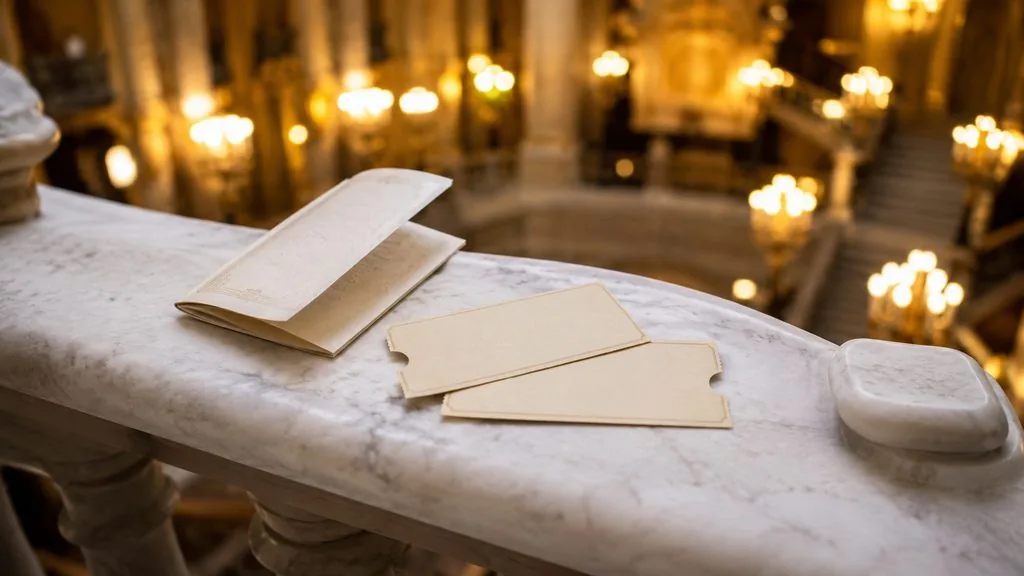
The official self-guided ticket at operadeparis.fr is the cheap way to see the building, and if all you want is the rooms, buy it and spend the difference at the Café de la Paix across the square (what a visit costs). What a tour adds is a storyteller, because the rooms are spectacular and largely unexplained. The dramatized visit is the one I point people to first: ninety minutes with a costumed guide, entry included, in separate French and English slots, and it carries more reviews than everything else in this catalogue put together (my full review, all the guided options). One warning: the theatre-district walking tour is an evening of Phantom and Les Misérables lore around the building, and it never goes inside. The catalogue for this monument is young, most listings have thin review pools, and I flag it every time, because your trust is the only thing this site has.
What I tell people at the door
Come at 10:00 on a weekday, when the doors open and the groups have not landed, and give the visit an hour to an hour and a half (the quiet hours). Take the métro: Opéra, on lines 3, 7 and 8, puts you on the square, RER A at Auber is the closest regional stop, and the visitor entrance is the Rue Scribe–Rue Auber corner, not the grand steps everyone photographs (arriving at the right door). Jeans are fine for a daytime visit, and even for performances smart-casual is a norm rather than a rule (the dress question). Leave the suitcase at the hotel: luggage is on the prohibited list and there is no big-bag storage (what you cannot bring). The house closes on 1 January and 1 May and on exceptional days besides, so check the official calendar before you build a morning around it.
That is the whole method. Sort yourself first: rooms only, the official ticket; stories, the dramatized visit. Either way, book online before you come — and if the auditorium doors happen to stand open when you reach them, go in first and look up before the room fills.
Frequently asked questions
Can you just walk into the Palais Garnier and buy a ticket?
No. The Opéra’s own rule is blunt: online booking is mandatory, and no visit tickets are sold on site. People still arrive at the Rue Scribe corner every morning expecting a box office, and every morning some of them walk away — what happens if you turn up without a ticket, and book a visit with entry included if the official calendar is sold through.
Is there a dress code at the Palais Garnier?
For daytime visits, none at all — jeans are fine, and nobody at the door is judging. For performances there is no formal requirement either; smart-casual is the norm, and people do dress up for premieres because it is that kind of room — the dress question, settled honestly.
How long does a visit to the Palais Garnier take?
A typical self-guided visit runs 1 to 1.5 hours; guided visits run about 90 minutes. Last admission is one hour before closing, so do not arrive at the end of the day expecting a full walk — how long to allow and the rooms worth your time.
Did the chandelier at the Palais Garnier really fall?
A counterweight did, and the distinction matters. On 20 May 1896, during a performance of Hellé, one of the chandelier’s counterweights broke loose and fell into the audience, killing one person. The full chandelier has never fallen. Gaston Leroux built The Phantom of the Opera on that accident — the 1896 night and the novel it fed.
Is visiting the Palais Garnier worth it?
For the building, yes, and the official self-guided ticket is the cheap way to see it. The harder question is whether a tour earns its extra cost, and the honest answer is: only if you want the stories, because the rooms come with very few labels — the worth-it question, taken seriously and when a guided visit is the better buy.
Should I visit the Palais Garnier or the Opéra Bastille?
For the building, Garnier wins without argument. For a show, the production decides the house: since the Bastille opened in 1989, most large opera productions play there, while the Garnier stage leans ballet plus some opera and recitals. Check the programme before assuming — the two houses, untangled and where to sit if you do book a show.
When is the best time to visit the Palais Garnier?
At 10:00 on a weekday, when the doors open and the groups have not landed. August brings extended hours; 1 January and 1 May are closed, and exceptional closure days happen, so check the official calendar before you build a morning around it — the quiet hours and hours and closures in full.
Still have questions? Email us [email protected]